Essential Tips for Residential Garage Door Repair
When your garage door starts acting up, it can throw off your whole day. Whether it refuses to open, makes a grinding noise, or just looks worn out, knowing the basics of residential garage door repair can save you time and frustration. This guide walks through common issues, key components, and what to expect when you call in a pro.
Understanding Your Garage Door System
A garage door is more than a big piece of metal or wood. It is a balanced system of springs, cables, rollers, and tracks. The two main types of spring systems are torsion springs and extension springs. Torsion springs mount above the door opening and twist to counterbalance the weight. Extension springs run along horizontal tracks on either side of the door. Both need proper tension to work safely. If a spring breaks or loses tension, the door becomes heavy and dangerous to lift manually.
Most residential doors are either panel garage door styles or roller garage door styles. Panel doors consist of hinged sections that bend as the door travels along the garage door track. Roller doors curl up into a roll above the opening. Each style has its own maintenance needs and failure points.
Common Problems That Need Attention
Noise is one of the earliest signs something is off. If you hear squeaking, grinding, or popping, check the garage door rollers and the track. Rollers that are worn or out of alignment cause friction and strain the opener. Lubricating the rollers and track with a silicone-based spray can help, but if the rollers are cracked or flat on one side, replacement is the proper fix.
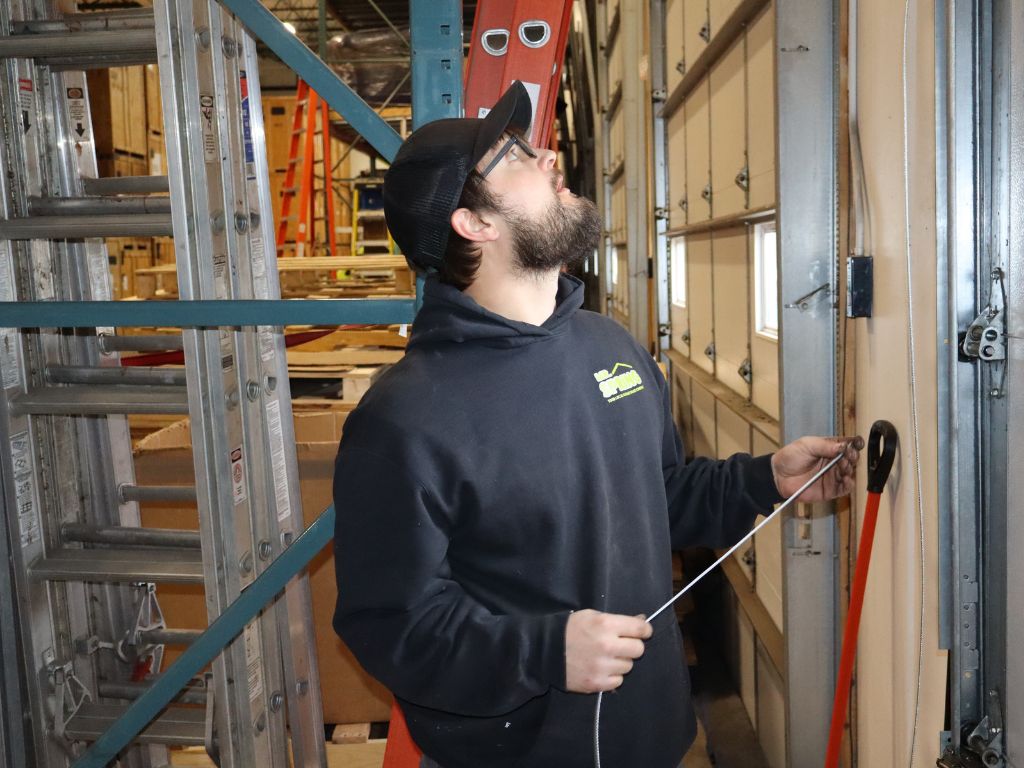
Another frequent issue is the garage door cable. Cables are wound steel ropes that lift the door. Over time they fray or snap, especially if the door is out of balance. A broken cable means the door will not open under power and can be risky to operate manually. Replacing a cable requires precise tensioning and should usually be left to someone experienced with residential garage door repair.
Safety sensors are a modern requirement. These small units near the bottom of the track send an invisible beam across the opening. If something breaks the beam while the door is closing, the door reverses direction. Sensors can get knocked out of alignment by a bump or vibration. When they are misaligned, the door will not close all the way. Cleaning the lenses and adjusting the brackets often solves it.
When the Opener Fails
The garage door opener is the motor and drive unit that does the heavy lifting. Common brands include LiftMaster, Chamberlain, and Genie. Each uses a different type of drive mechanism, from chain drives to belt drives to direct screw drives. If the opener runs but the door does not move, the problem is often a stripped gear or a broken drive coupling. That is a job for a technician because opener repair involves electrical components and precise adjustments.
Smart garage door controllers have become very popular. They let you open and close the door from a phone app and send alerts if the door is left open. But a smart controller is only as good as the mechanical parts it controls. If the door binds on the track or the springs are off balance, no amount of smart technology will fix the motion. Always address the mechanical health of the door before upgrading the electronics.
Springs and Balance
A properly balanced door should stay put when lifted halfway and released. If it falls or rises on its own, the springs need adjustment. Torsion springs are under a lot of tension. Trying to adjust or replace them without the right tools and training can cause serious injury. Extension springs also store energy, but they are generally safer to work on because they are less compressed. Still, any spring work is a core part of residential garage door repair and should be handled with care.
Wayne Dalton and Clopay are two major manufacturers of garage door panels and spring assemblies. Amarr is another common brand, especially in the Midwest. Knowing the brand helps a technician order the correct parts, but the underlying principles of spring tension and cable routing are similar across brands.
Track and Roller Maintenance
The garage door track guides the door from vertical to horizontal as it opens. Over time, the track can bend or get clogged with dirt and debris. A bent track causes the door to bind or come off the rollers. Straightening a track is possible, but if the bend is severe, replacement is the better option. Rollers on the ends of the door panels should spin freely. If they are stiff or chipped, they can damage the track and the door itself.
Lubrication is simple but often neglected. Use a white lithium grease or silicone spray on the track and rollers. Do not use WD-40 as a lubricant; it evaporates quickly and leaves no film. A dry track accelerates wear on both the rollers and the opener.
Seals and Weatherstripping
The garage door seal runs along the bottom and sometimes the sides of the door. Its job is to keep out rain, snow, drafts, and pests. A torn or compressed seal lets in cold air and moisture, which can damage the floor and anything stored in the garage. Replacing a seal is a straightforward DIY task: pull off the old seal, clean the channel, and press in the new one. But if the door does not sit level on the floor, a new seal will not fix the gap. That indicates a track or spring alignment issue that needs professional attention.
When to Call a Professional
Some homeowners are comfortable with basic maintenance like lubricating rollers or tightening loose bolts. But residential garage door repair often involves heavy parts under tension. Springs, cables, and openers can cause injury if handled incorrectly. If you are unsure about a repair, it is smart to call a company that specializes in these systems. In the Minneapolis and St. Paul area, for example, there are professionals who understand the local climate and how it affects garage door components. Minnesota winters put extra stress on seals, springs, and opener mechanisms. A technician who works in that region will know what to look for.
When selecting a service, ask about the brands they work with. Most technicians handle LiftMaster, Chamberlain, Genie, Wayne Dalton, Clopay, and Amarr. A company that stocks common parts can often complete repairs in a single visit. Also ask whether they guarantee their work. A guarantee on parts and labor gives you peace of mind that the repair will last.
Preventive Habits
The best way to avoid emergency repairs is to keep up with routine checks. Once a month, run through this quick list:
- Listen for unusual noises when the door opens and closes.
- Check the balance by disconnecting the opener and lifting the door halfway.
- Inspect the garage door cable for fraying or rust.
- Clean the safety sensor lenses and make sure they are aligned.
- Look at the garage door seal for cracks or gaps.
These simple steps catch small problems before they turn into big ones. A little attention goes a long way toward extending the life of your door system.
Final Thoughts
Garage doors are complex machines that combine heavy lifting with everyday convenience. Understanding how they work helps you make informed decisions about maintenance and repair. Whether you handle minor tasks yourself or call in a pro for residential garage door repair, knowing the key components and common failure points puts you in control. Keep the track clean, the springs balanced, and the sensors aligned. Your door will reward you with years of reliable service.